

We Envy the Mayflies
art by Karin Söderquist
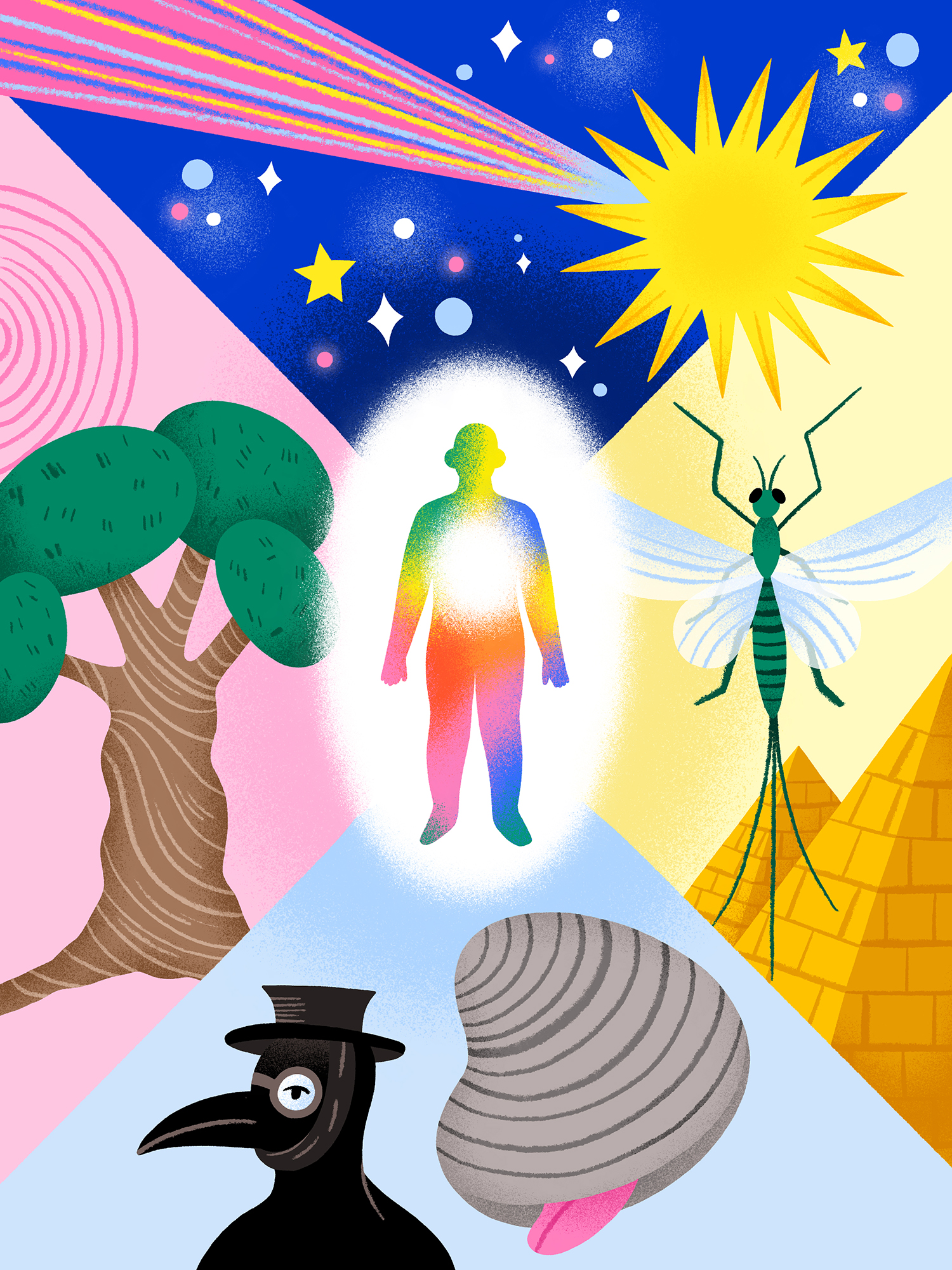
The mayfly does not envy us our time, though it lives just for a day. Its minutes are weeks, and its hours are months, its moon waxing and waning in the space of one of our breaths. Over the course of their generations, they build pyramids of sticks and stones, they crown kings and endure plagues from the amoebas running rampant in their streets. In their 630th generation, a few paint in the Renaissance style, and the Industrial Revolution starts just months later. In their 900th generation, the mayflies zoom around, not needing cars—they skip that part and go straight to selling vacation time shares and disbelieving in climate change and building invisible little planes to expand their wings. That’s the few generations they disappear. Scientists posit that they tunnel underground to avoid the birds and their beaks full of biblical Revelation, but no. Around their 1,250th generation, they fabricate bombs to drop on the other mayflies, those ones that deserve it, those from the next field over that had the audacity to think they could live without taxes, have a different wing color, or worship a fire instead of the sun.
Their bombs, each cycle, bloom and die, and the chemical in them unravels their time, the neural paths they created in their grain-sized brains shriveling.
They have gone through this cycle many times.
The mayfly does not envy us our time, as we humans do not envy a clam’s age. A clam’s minutes are our seconds, and its hours could translate to our days. One lived to be 507, according to the bands on its shell, showing its age like the rings of a tree, the dendrochronology of its soul. The clams have only experienced progress up to the Renaissance, and only those who live where light can reach. They paint their Mona Lisa as we speak, etching her famous smile in tide pool rocks. They have yet to know the convenience of electricity or the alacrity of flight. They have just overcome the Black Death, where the infected fleas jumped from one open mouth to another, and their fleet of feet no longer flies the flag of disease. Those on the ocean floor peer up at the unending darkness and believe the whales revolve around their spit of coral. They conduct witch hunts on their fellow clams, pry them open, and scrape out their feet with the bones of those above. The light they know comes from the anglerfish’s deceit, brief sparks of sweet brightness flaring in the dark ages of their minds.
We do not envy the clam’s sense of time, as the clam does not envy the Great Basin Bristlecone Pine tree. 4,850 years old, it is still learning how to write in cuneiform. It hasn’t even built pyramids in its branches yet, and the concept of Gilgamesh has only just begun to take form inside the heart of its trunk, questing for immortality, weathering the Great Flood with the strength of its single-minded endurance. This tree has watched the sun fall and get back up so many times it wants to reach out and sing it to sleep for a few hundred years. For though it hasn’t advanced in logic, it knows the primeval laws: hibernation opens the door to survival, and one cannot produce at 100% for too long, or they will burn out. To it, humans bound as blobs of color, as brilliant spears looking to die, just as we do the mayflies. Its roots grip onto cliffs so steep, and like little bears, they mostly sleep, each decade a month, each hundred years just another winter to weather. The mayflies that rest in its branches undergo three cycles of bombs in the time it takes to add another ring to its trunk.
The Bristlecone Pine does not envy or even know of the stardust spread so bright and slow. It landed here when the sun first woke up and stretched its arms. 4.6 billion years young, it hasn’t even divided its cells in mitosis, let alone climbed from its soupy thoughts to contemplate time. It only knows the impact it made, the great shuddering underneath it as it nestled in its cradle of a crater, and the reverberations of its arrival still echoing around it like a lullaby. The forests and the oceans and the islands that raged up from the stomach of the earth blur around it, simple blinks in the stardust’s first second. For what is time but measured experiences? And something that lives so slow hasn’t learned to walk, hasn’t learned to kiss, hasn’t slipped on the ice, hasn’t fitted planes over their wings. Yet, one could argue, the stardust also hasn’t had to endure plagues, or learned cruelty enough to hunt witches, or fall prey to ethical leprosy and let it fester long enough to bomb another field of mayflies.
Yet still, we do not envy the stardust, or the pine tree, or the clam. We envy the mayflies, for they live, and live, and live, for it is the nature of all life that the less time we have, the more we use it.
