
Lost Objects
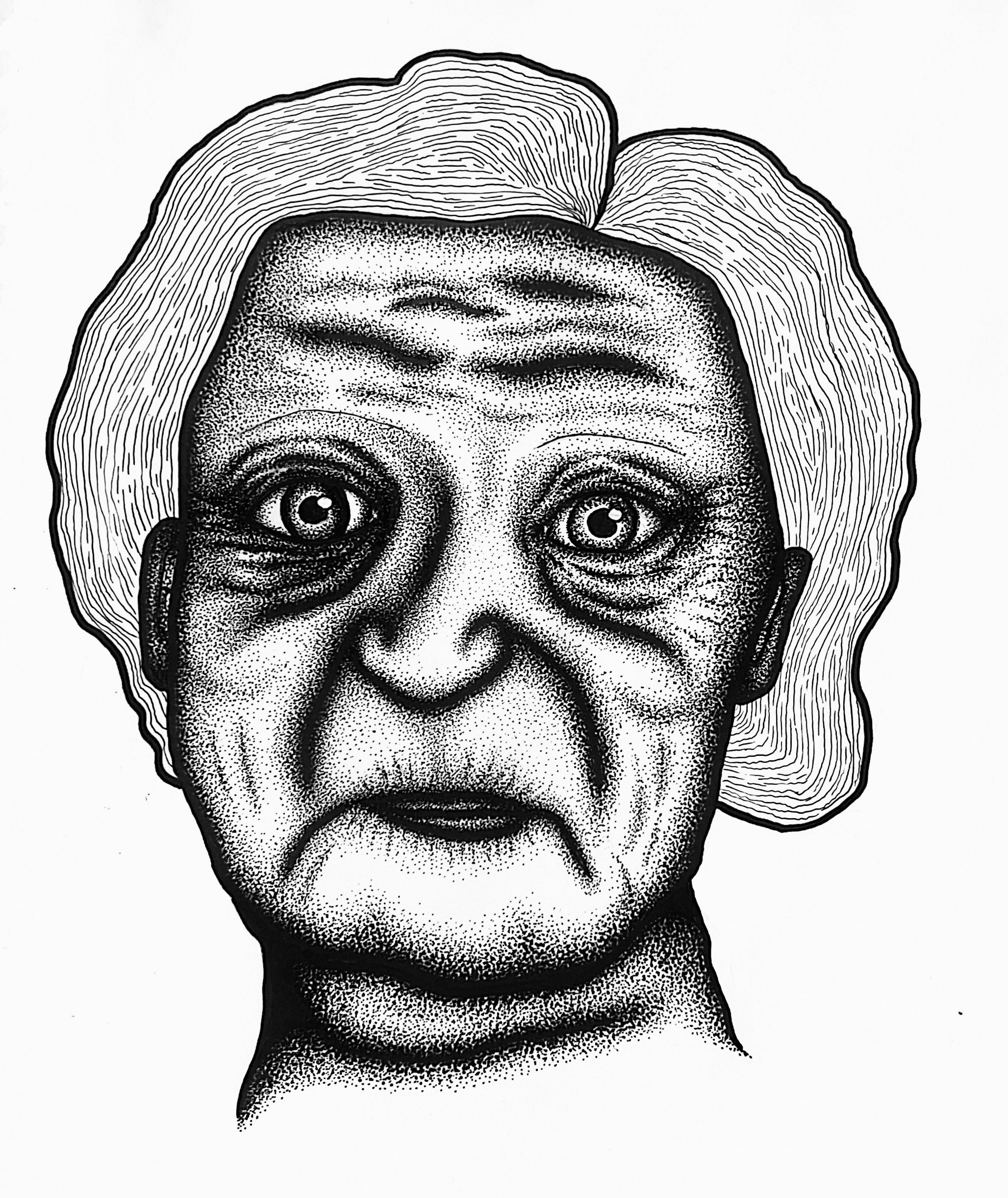
art by Kateryna Czartorysky
Loss: having something ripped away from you, whether you are prepared or not.
I saw my grandmother almost cross over to the other side a handful of times. The side no one knows anything about—nonetheless, we’re all very curious. Once, after waiting alone in a hospital room for hours to see if her heart would survive a hip replacement surgery, I (the paperwork signer) went on a dazed walk around the block. Next to the building was an enormous tree, shedding bright yellow leaves in the November fog. What a strange world we live in, I thought. A world where people get wheeled out of operating rooms and, at the same time, golden flakes fall quietly from branches, stunning those who happen to notice.
It felt unfair. I had not signed up for this, the caregiver role. Thousands of miles away, someone had taken off their own backpack full of rocks and slung it over my shoulders. Carry this, they told me. It was not my backpack. I carried it anyway. I wouldn’t do it to my child. I was the first to show up when crisis arrived, my grandmother’s unofficial on-duty point of contact—refilling pill boxes, pricking fingers, plating her favorite cheese khachapuris.
Sometimes I was the unqualified nurse, but most days I was her favorite grandkid (as her cognition began to wane, she would unapologetically declare this fact to the entire family). When emergencies faded, I would sit beside her on the brown couch, where she sat as though sewn in place, playfully pulling at the wrinkling skin on her hands. She told me, “Do you know I love you more than anyone on this planet?” Imagine the responsibility. I left, always, with warm palms cupping jars of borscht soup intended for her and bulging pockets struggling to contain the dozen chocolates stuffed into them. From the street, I would look up to the third-floor balcony, and there she would be—unable to see that far down—waving in my direction, a loving metronome.
But this time, as she lay dying in a hospital in Yerevan, I had just moved ‘down under,’ as they say, and couldn’t return for some time (paperwork). Now, as the flow of blood into her brain declined by the minute, all I could do was watch videos of her cutting the ends of green beans on my phone.
My backpack had suddenly emptied, and the lightness felt heavier.
In this suspended period, I started losing items connected to my family. Sunglasses left on my head as I tumbled into a wave—a rookie move, in hindsight, but then again, the ocean and I didn’t interact much. Glasses gifted by my father, now gifted without my consent to the Pacific. I sat on a sand-covered towel next to my husband, feeling like an idiot.
“It’s okay,” he said. “They are just glasses.”
How could I explain to him that I knew I would lose my grandmother soon, that the Universe was forcing me to get used to it?
More belongings: one pearl earring—a family heirloom—gone after a wedding recovery day, abandoning its twin. Or a leather belt that either got packed away mid-move or is lying rolled up in a drawer in my old apartment, I’m still not sure.
When you lose so many things all at once, you are reminded that none of them belonged to you. It is training for when you receive the text that your grandmother has passed on.
You thank the Universe.
For trying to help, to prepare you. For easing you into the sudden plunge of loss.
One moment, she is here; the next, she is not.
In a daze, you go on a walk after you read the message.
Sunlight dances on the river you’re staring at. “I see what you were doing,” you tell the Universe. What a strange world we live in, you think. A world where loved ones finally discover the other side, and, at the same time, bodies of water shine gloriously.
I don’t lose anything else after she is gone.
