

King Tut’s Heart is Missing
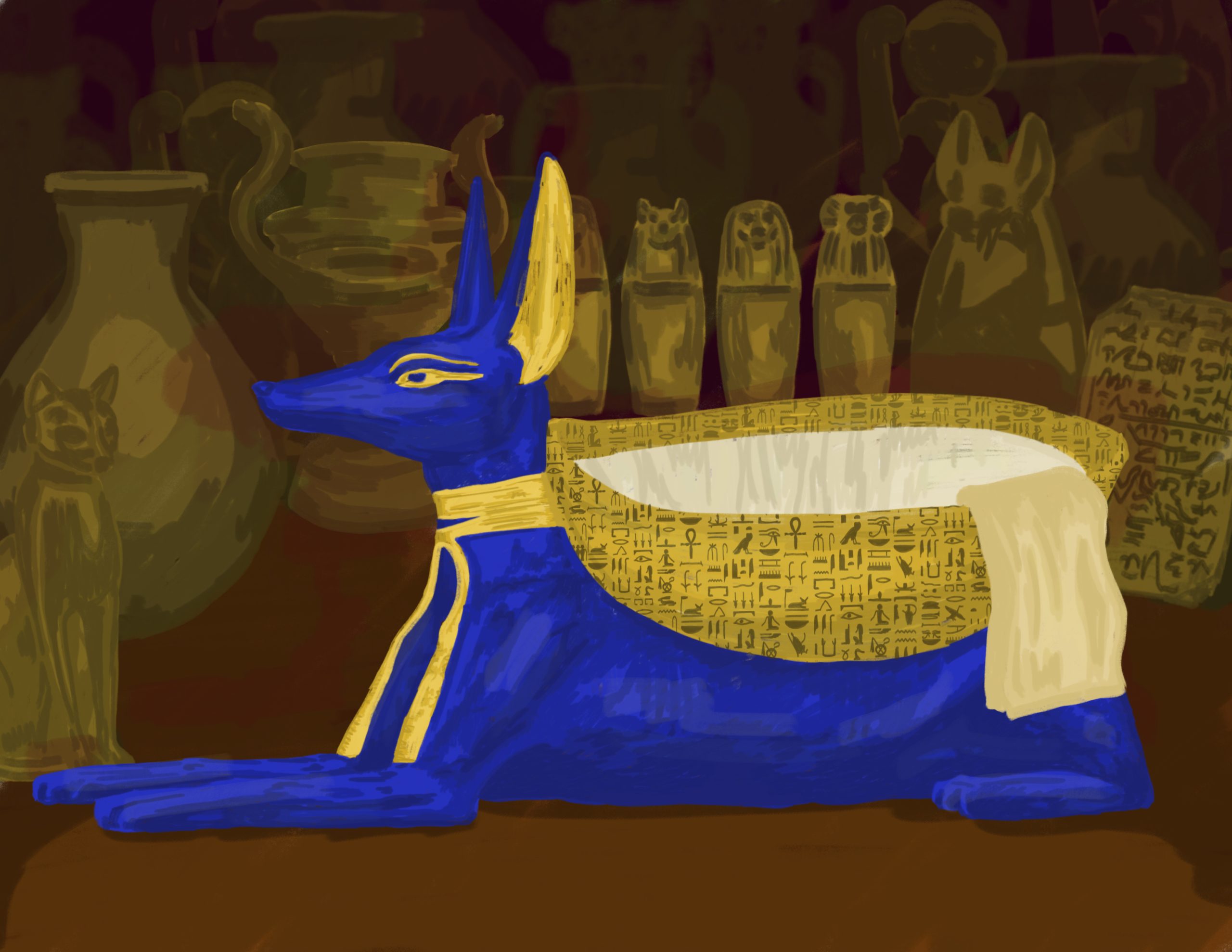
art by Taylore Rowland
King Tutankhamun was buried with 5,398 items, including underwear, walking sticks, and solid gold protectors for his toes. It took ten years to catalog everything, and his mummified heart is missing.
King Tut’s heart is missing because it received a separate burial. All the riches of his tomb show he was revered, despite his teenage lifespan and famous clubfoot. A very special heart could have commanded that honor in the mysterious customs of its day. The missing heart will tantalize generations of budding archaeologists who hear this story on a childhood museum visit and realize, perhaps for the first time, how little is known of the world. How much more is yet to be discovered.
King Tut’s heart is missing because his embalmers—those expert priests with their canopic jars and natron mounds—were startled by the too-close laughter of a child and turned their backs, just for a moment. Any dog owner knows what could happen. The cats were sacred, but the dogs were everywhere.
King Tut’s heart is missing because it was stolen. His father Akhenaten upended society: up and relocated the entire capital city, condensed a polytheistic panoply into the cult of the single deity Aten. King Tut (Tutankhaten, before he changed his name) restored the gods and rituals of the past, but he still had enemies. What happens to the children of the reviled? Which of our parents’ burdens will we forever bear?
King Tut’s heart is missing because he died from severe blunt-force trauma to the chest, such that preservation of the heart—that most vital of organs—became impossible. He died from a crushing chariot accident, or a hippo attack. Hippopotamuses, the deadliest land animals, kill between four and five hundred people annually. Death by hippo is approximately as common as a newborn dying from sepsis or respiratory distress today, which is to say, much more common than one might think.
King Tut’s heart is missing because he had two infant girls, both born cold and sleeping, already tinged with Osiris’s pallor. Two toy-sized sarcophagi in his burial chamber tell the tale. How do any of us make it through the gates of this life fully intact? What is the difference between a missing heart, and one merely broken beyond repair?
